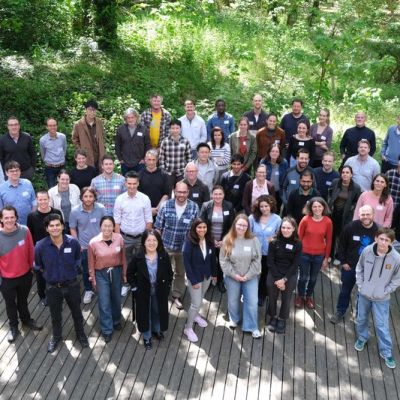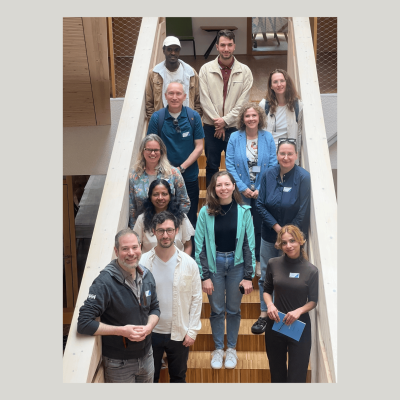


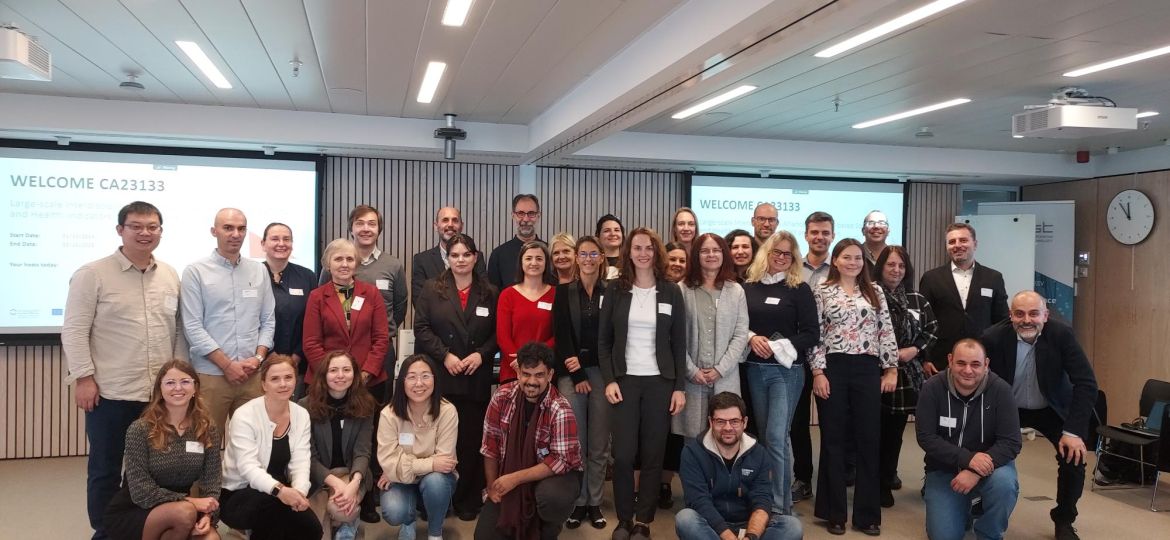
On Monday 21 October 2024 we successfully kicked off our COST Action on Nature-based Solutions and Health, LILY, with Hei-Planet research group leader Marina Treskova nominated as the Action Chair.
The event was supported by COST (European Cooperation in Science and Technology).
About LILY
Nature-based Solutions (NbS) are instrumental in European climate change mitigation and adaptation strategies. Through creating ecosystems, NbS can have positive and negative impacts on the health of people, animals and the environment, i.e. co-benefits and unintended consequences.
As NbS are increasingly integrated into policy and implemented on the ground, it is urgently needed to adopt evidence-based approaches to their design and implementation, which minimize maladaptation and mislabeling practices, particularly in the health domain.
This Action (LILY) focuses on NbS impacts on health (NbS-Health) and addresses: (i) the lack of a comprehensive framework outlining health outcomes and underlying pathways, (ii) gaps in NbS-Health indicators, (iii) vulnerability and inequality, (iv) NbS-Health monitoring, (v) NbS-Health gaps in NbS platforms.
LILY will engage scientists, implementers, stakeholders, and community in participatory approaches and produce (i) a conceptual NbS-Health framework, (ii) best-practice guidelines for spatio-temporal NbS-Health indicators considering vulnerability and inequality, (iii) recommendations on novel data streams and methodology for indicator-based monitoring and evaluation, and (iv) a network and data platform for proficient information sharing.
LILY will empower young scientists through summer schools, knowledge exchange workshops, and arranging the first NbS-Health conference. The outcomes will be translated into policy briefs, materials for Lancet Countdown, further initiatives, projects and clusters, and public dissemination.
LILY commits to excellence and innovation through co-production among scientists and stakeholders, transdisciplinarity, One Health concept, Exposure-Vulnerability-Risk framework, and inclusive and gender balance approaches in its governance.