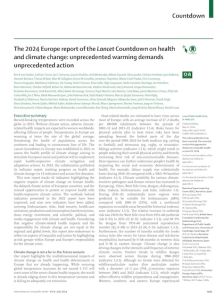


Compiled with the contribution of 69 experts spanning 42 academic and UN institutions, the new report explores 42 indicators which monitor the health impacts of climate change, as well as the inadequate, delayed or missed opportunities of climate action in Europe.
The Heidelberg Planetary Hub research group on the Lancet Countdown: Health and Climate Change in Europe actively contributed to this report.
Key Messages
CLIMATE CHANGE IS ALREADY IMPACTING HEALTH IN EUROPE
Temperatures in Europe are warming at twice the rate of the global average. This is bringing increases in heat-related deaths, enabling the spread of infectious diseases, increasing drought conditions with impacts on food security, and undermining the social and economic building blocks for good health.
DEEPENING HEALTH INEQUITIES IN A WARMING WORLD
The health impacts of climate change are unevenly distributed, often reflecting intersecting patterns of socio-economic development, marginalisation and historical – and ongoing – inequity. Across the region, Southern Europe tends to be more affected by heat-related illnesses, wildfires, food insecurity, drought, and leishmaniasis. Within countries, ethnic minoritised and Indigenous people, low-income communities, migrants and displaced people, sexual and gender minoritised, and women going through pregnancy and childbirth, tend to be more severely affected.
TAKING RESPONSIBILITY TO ACCELERATE ACTION FOR A HEALTHY TRANSITION
In 2021, emissions from fossil fuel combustion in Europe was six times African per person emissions and almost three times Central and South American emissions. Limiting warming to avert further health impacts requires Europe to commit to a fair and healthy environmental transition.