


Scroll Top

Research group

Hitch-hiking East Africa: Spread of Artemisinin-Resistant Malaria through Mosquito and Human Mobility

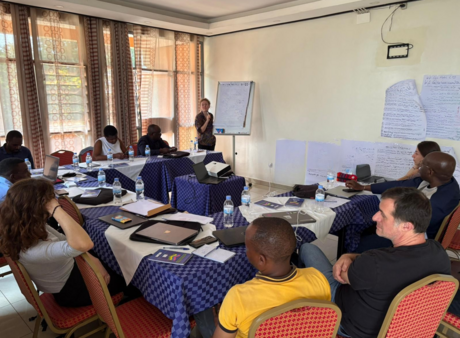
Hitch-hiking East Africa: Spread of Artemisinin-Resistant Malaria through Mosquito and Human Mobility is a transdisciplinary project with collaborations between multiple universities in East Africa and Germany and Dr. Welmoed van Loon from the Charité Institute for International Health as project lead. The researchers at Hei-Planet are significant collaborators in the project, leading the work packages that predict artemisinin resistance spread and conduct threat analysis through modelling.

The project is funded through the initiative ‘Transdisciplinary Approaches to Mobility and Global Health’ by the Volkswagen Foundation, Novo Nordisk Fonden, and Wellcome Trust, and is dedicated to research on a central question: How do mobility trends affect individual and societal health worldwide? What strategies can be developed to create resilient, equitable health systems in the face of global migration?
Hitch-hiking East Africa: Spread of Artemisinin-Resistant Malaria through Mosquito and Human Mobility

55

Malaria remains a major public health challenge in Africa, causing high mortality each year and relying heavily on effective treatment with artemisinin-based combination therapies (ACTs). However, the recent emergence of artemisinin resistance (AR) in East Africa poses a serious threat to malaria control, with the potential for treatment failure and no immediate alternatives available. Although currently localized, this resistance could spread across the continent. Malaria parasites are professional “hitch-hikers”, as they move by means of infected human hosts or Anopheles mosquitoes. The infected humans and mosquitoes follow multiple pathways and may move to new territories through local mosquito movement, human travel between communities, long-distance travel, and even transport via vehicles such as night buses and boats. This project focuses on understanding how these different transmission routes contribute to the spread of AR across four bordering countries in the Great Lakes Region of East Africa, the current epicenter of resistance. By integrating fine-scale molecular, entomological, and behavioural data from communities, travel hubs, and transport systems with existing datasets, the project aims to develop mathematical models that can predict and help control the spread of artemisinin resistance.

55

Our collaborators in this project

University Teaching Hospital of Butare (Rwanda) Catholic University of Bukavu (DRC) Johannes Gutenberg University Mainz (Germany) Infectious Diseases Institute (Uganda) Charité – Universitätsmedizin Berlin (Germany) Mountains of the Moon University (Uganda) Rwanda Biomedical Center Catholic University of Health and Allied Sciences (Tanzania).