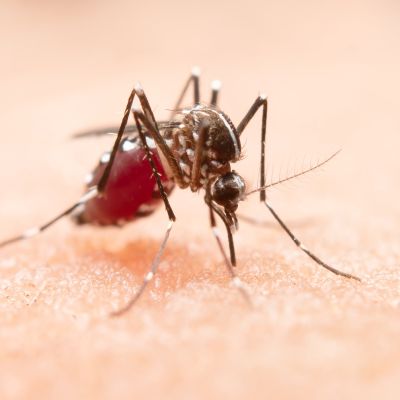



The new study Fine-scale temporal and spatial dynamics of Ae. albopictus response to larviciding with Bacillus thuringiensis israelensis in Heidelberg, Germany, examined the efficacy of the bacterium Bacillus thuringiensis subsp. israelensis (Bti) in controlling Aedes albopictus mosquitoes, also known as the Asian tiger mosquito. The research focused on urban areas of Heidelberg and used a distributed lag non-linear model (DLNM) to assess the timing and duration of Bti’s impact.
The team analysed data from 195 mosquito traps and 4,387 Bti treatments in local environmental conditions. The findings confirmed that Bti significantly reduced mosquito egg counts. However, its effect was short-lived, suggesting that repeated applications are necessary to maintain control and prevent the mosquitoes from establishing stable populations.
The Ae. albopictus mosquito has been spreading rapidly across Europe, driven by rising temperatures, international trade, and increased human mobility. By 2024, established populations had been reported in more than 40 districts across Germany, including Berlin, Munich, Bonn, and areas near Frankfurt. This species poses public health risks because it is a competent vector for several arboviruses, including chikungunya and dengue.
Authorities commonly use Bti as a larvicide to control mosquito breeding. Yet, important questions remain about how well it works in urban areas, where hidden breeding sites can reduce treatment coverage. Although many lab studies and commercial products claim Bti remains effective for up to 30 days, field results often show shorter durations.
As Europe expands its mosquito control efforts, understanding how Bti effectiveness changes over time is crucial. This knowledge helps in designing efficient control programs without overburdening the public or causing engagement fatigue.
To fill this gap, the new study done in Heidelberg used detailed spatial and temporal data. By applying the DLNM framework, researchers assessed how long Bti remains effective in the field and how factors like microclimate and urban green spaces influence its persistence.
The results showed Bti as an effective method, causing a clear reduction in mosquito egg counts. However, the analysis suggested limited temporal efficacy, suggesting a need for repeated interventions to prevent the establishment and spread of mosquitoes.
Read full paper here: https://www.nature.com/articles/s41598-026-46094-9#Sec2