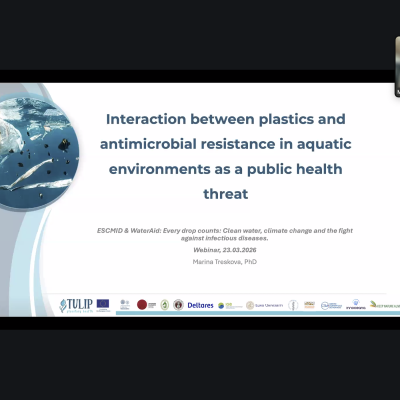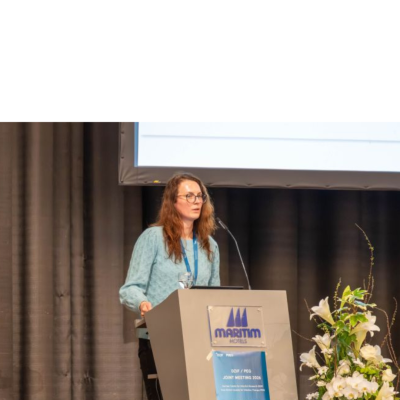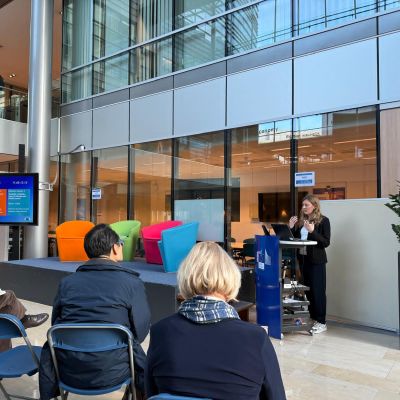


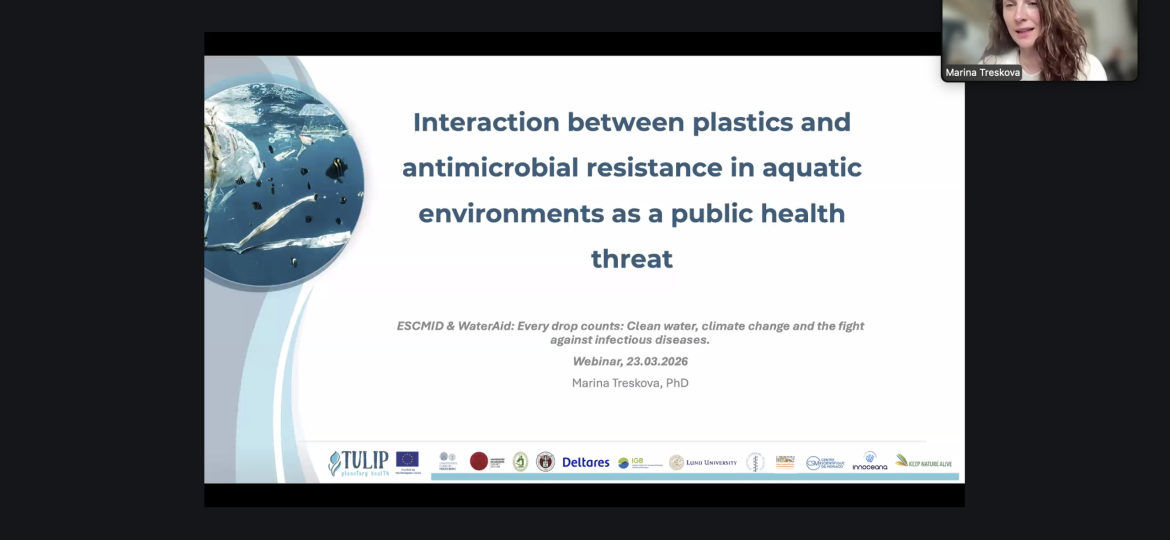
On 23 March 2026, Dr. Marina Tresova delivered a talk on the interaction between plastics and antimicrobial resistance (AMR) in aquatic environments, highlighting this issue as a significant and emerging public health threat.
The talk was a part of the webinar conducted by the European Society of Clinical Microbiology and Infectious Diseases (ESCMID) in association with WaterAid.
AMR – a phenomenon in which bacteria, viruses, fungi, and parasites evolve over time and no longer respond to medicines, making infections harder to treat. AMR has been identified as one of the top ten global health threats, with serious consequences not only for human, animal, and aquatic health, but also for the global economies.
The talk emphasized the role of the current “polycrisis” – a combination of global challenges such as urbanization, climate change, and rapid technological development-in exacerbating the spread of infectious diseases and accelerating AMR.
A key focus of the talk was the role of plastics in aquatic systems. Plastics do not fully degrade: instead, they fragment progressively into smaller particles over time. These particles provide surfaces for microbial communities to form, which is known as the “plastosphere.” The plastosphere becomes a hotspot for antimicrobial resistance, facilitating the accumulation, interaction, and transfer of resistant microorganisms
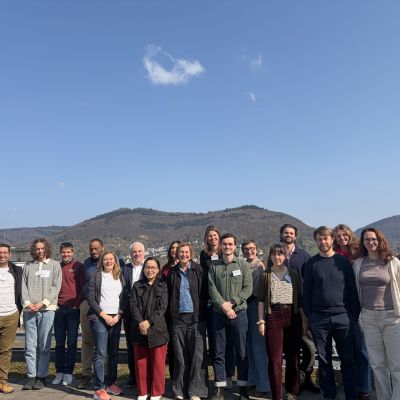
Dr. Treskova also demonstrated how recent studies at Heiplanet contribute to the understanding of the links between plastic pollution and AMR, including research conducted by the TULIP project and the Lancet Countdown on Health and Plastics.
The talk was followed by discussions with other panel members and participants.