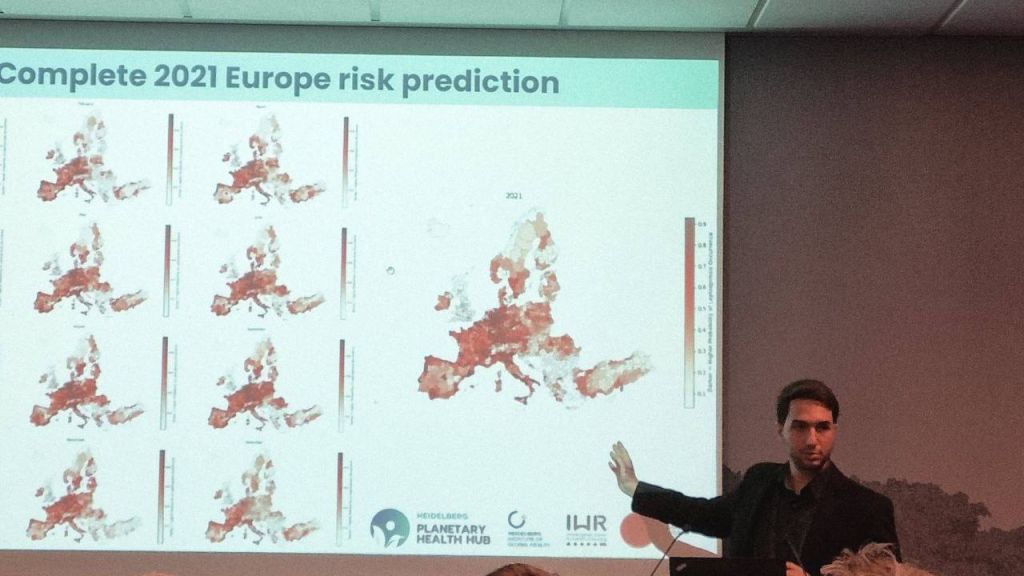


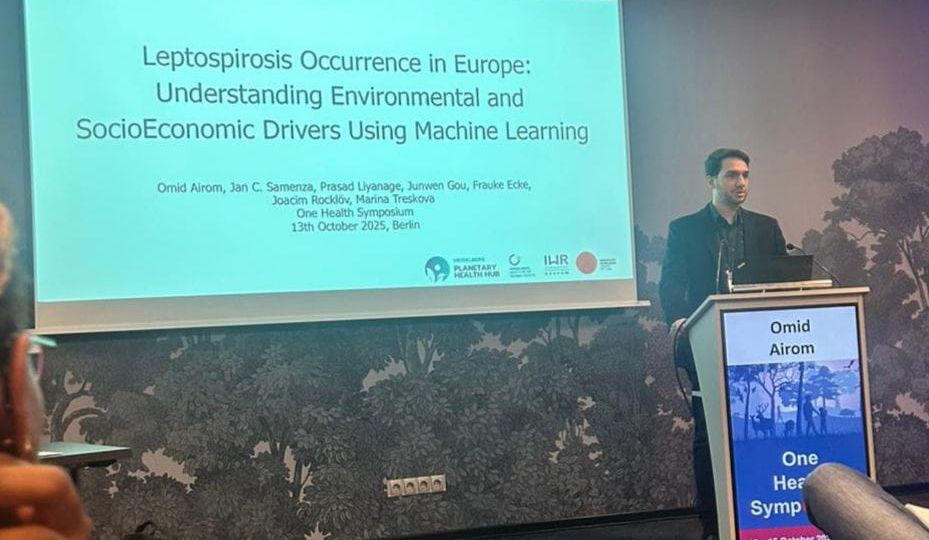
Omid Airom, PhD candidate at Hei-Planet, participated in the One Health Symposium 2025 (OHS2025) held in Berlin from 13th to 15th October 2025. He presented his research titled “Leptospirosis Occurrence in Europe: Understanding Environmental and Socio-Economic Drivers Using Machine Learning.”
This study holds particular importance in light of recent OECD (European Centre for Disease Prevention and Control) reports indicating a rising trend in leptospirosis cases across Europe. Omid’s research investigated drivers of leptospirosis using a predictive modeling framework.
The research findings revealed that temperature, livestock population, employment, and population density were significant predictors of disease occurrence. These results contribute valuable insights for developing spatial risk mapping and predictive tools to support healthcare planning and disease prevention strategies.
Read abstract of the paper here.