

Heidelberg researchers identify local outbreak indicators and develop new regional modeling approach.
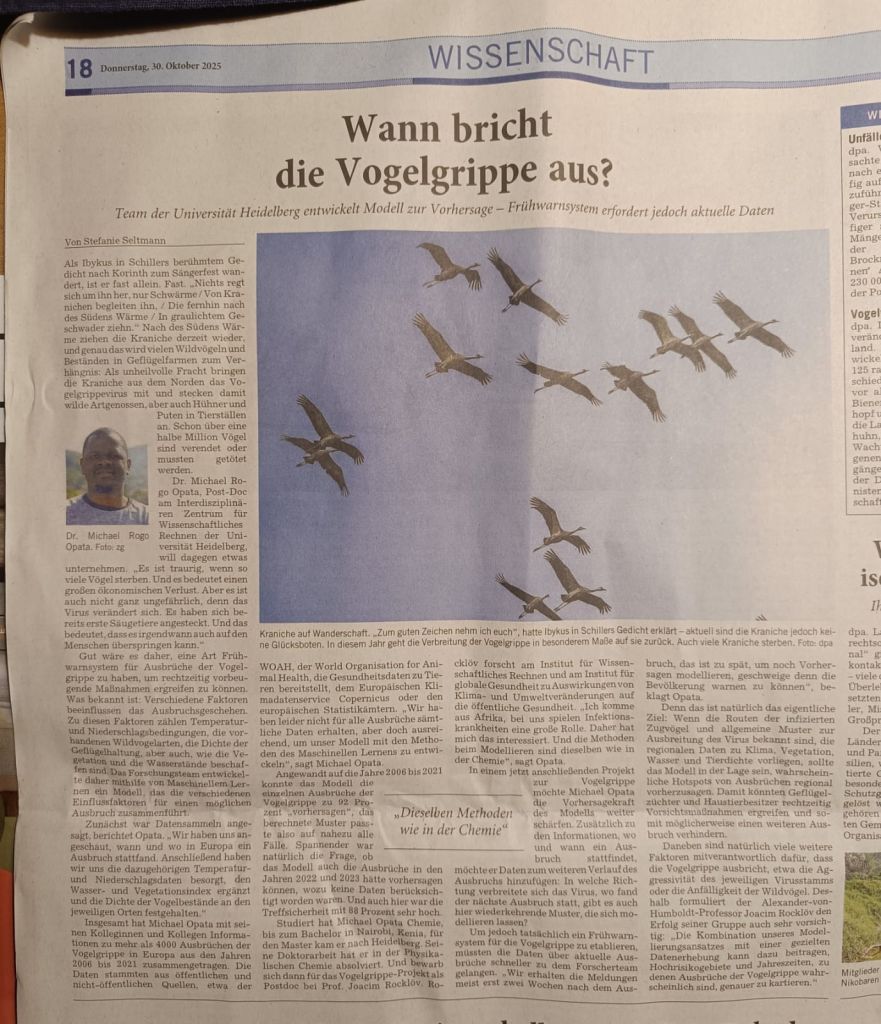
Local factors such as seasonal temperature, the year-dependent water and vegetation index, and data on animal density can be used to predict regional outbreaks of avian flu in Europe. This is the finding of a research team led by epidemiologist, mathematician, and statistician Prof. Dr Joacim Rocklöv. The researchers at Heidelberg University developed a machine learning model that can predict highly pathogenic avian influenza outbreak patterns in Europe with great accuracy using various indicators. The modeling approach and targeted data collection could therefore contribute to proactive prevention measures.
Original Publication: M. R. Opata, A. Lavarello-Schettini, J. C. Semenza, and Joacim Rocklöv: Predictiveness and drivers of highly pathogenic avian influenza outbreaks in Europe. Scientific Reports (17 July 2025)
Read detailed press release from Heidelberg University here.
Gallery